
Oak Park Resident Lookup Sources
An Oak Park resident lookup is a way to test a name against public records. Each record answers a different question. One record may tie a person to property. Another may show a court case or a life event with a firm date. Used together, they help you find who lives on a street in Oak Park. They can also place a household in a given year. Start from an address, a year, or a parcel number. Compare what separate custodians hold, since none of it alone proves a current connection. When a name is common, keep the spelling, jurisdiction, and record date beside every result. Stop if a source shows a redaction or protected address.
| Record class | Useful confirmation | Oak Park route | Access boundary |
|---|---|---|---|
| Parcel and assessment | Address, PIN, municipal context, and an owner-of-record display when available | Property Gateway or Oak Park BS&A | Reference data, not a certified record |
| Voter registration | Permitted public registration fields and requested history | Michigan QVF request | Protected fields remain excluded |
| Court or probate | Visible case information or a probate case number | MiCOURT and Oakland Probate | Informational display or custodian copy route |
| Marriage or death lead | Possible event for a name and jurisdiction | Oakland genealogy search | Finding aid before an eligible order |
| Vital certificate | Official event copy or limited verification | Oakland County or Michigan MDHHS | Eligibility varies by record and age |
Pick the least sensitive source that answers the question. A parcel lead suits an address question. A genealogy result fits a family-history date. For a same-name problem, a resident lookup needs an independent date, address, or case number rather than a stitched-together profile. Resist merging hits from different custodians into one person. Keep the threads separate until two records connect on their own.
Note: Record the custodian, record date, and access date with each result so later checks do not confuse a finding aid with an official copy.
Oak Park Resident Lookup Workflow
Common names demand discipline. Before opening a second source, make the first match reproducible by preserving the custodian's spelling, the date you accessed it, and the record's jurisdiction. A ten-digit county PIN settles many property questions. It cannot tell you who receives mail at the house. If an event, case, or address cannot be independently anchored, label it unresolved rather than calling it a person match. Precision early saves confusion later.
- Normalize the known Oak Park address through USPS, then locate the address or PIN in Property Gateway or BS&A.
- Record the address, parcel identifier, legal-description wording, source date, and any owner-of-record display without assuming occupancy.
- Search the appropriate court, probate, voter, or genealogy source using the name and a lawful discriminator such as year, address history, or case number.
- Confirm an important match with a custodian record, eligible certificate, or filed document, then note what remains unconfirmed.
- Docket
- A court's running case record, including events and filings when available to the public.
- Index and image
- An index points to a record. An image is a view of the underlying filed or recorded document and may have separate access rules.
- Certified copy
- A copy issued and certified by the custodian. It carries more official weight than a search display.
Historic households call for a different trail. Pair a dated directory or census entry with an address and year, then test it against a deed, tax, probate, or archive record. Each old record narrows the window a little more. The historical directory collections follow their own source rules, which the Oak Park directory book lays out.
Oak Park Court Record Limits
The 45th District Court sits at 13600 Oak Park Blvd, reachable at 248-691-7440. Posted public hours run Monday through Friday, 9:00 a.m. to 3:30 p.m. Records requests must be made in writing. Copies cost $1 per page. Certified copies run $10. Court records fall outside Michigan FOIA, and the court does not provide criminal-history checks. The 45th District Court records page shows the written-request route and contact details.
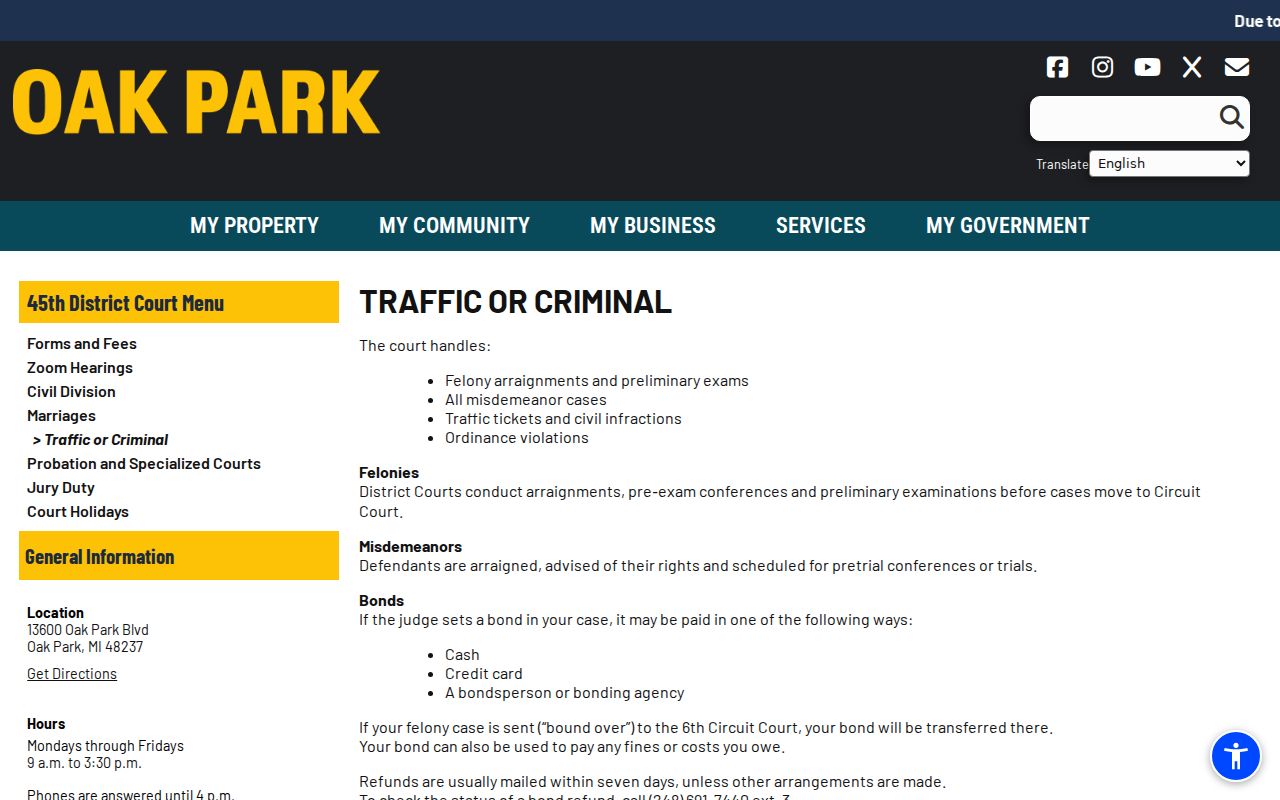
A case appearing on a screen is an access reference, not proof of availability. Use MiCOURT for an appropriate state case search. The displayed information may fall short. Ask the court clerk for an official file or copy. The display is informational only. Some criminal convictions appear just when sentencing occurred within seven years. Listed nonpublic categories are excluded or limited as well. MiCOURT's terms prohibit bulk data, scraping, automation, and VPN use. The terms also warn of rate limits.
Oakland Probate Online Services searches a name for a case number. Court Explorer then orders copies by that number. A court page may show a result. Record the court, case number, case type, party role, filing date, event date, event description, disposition, and any access notice. MiCOURT's exact live search fields are not described here. The rendered labels are not part of its public display.
Oak Park Voter Record Boundaries
Oak Park's elections page sends registration and status questions to state systems. MVIC serves individual voters, not the public at large. Wider voter information moves through the state Qualified Voter File request process. The QVF form lets a requester ask for a geography, such as a city, ward, and precinct. It also offers election-history choices. Submission requires identifying contact information, a delivery channel, and the state route. The form names MDOS-FOIA@Michigan.gov and a Bureau of Elections mailing route in Lansing. It describes electronic delivery in two different ways. Confirm the current format and cost with MDOS before ordering.
Public QVF material can include a complete name, residential address, and mailing address when available. Birth year, registration date, status, and requested history can appear as well. Month and day of birth stay private. So do phone, email, ID information, signatures, protected-address records, and ballot choices. The Oak Park elections page supplies the clerk and official election context. It does not offer a resident-name search.
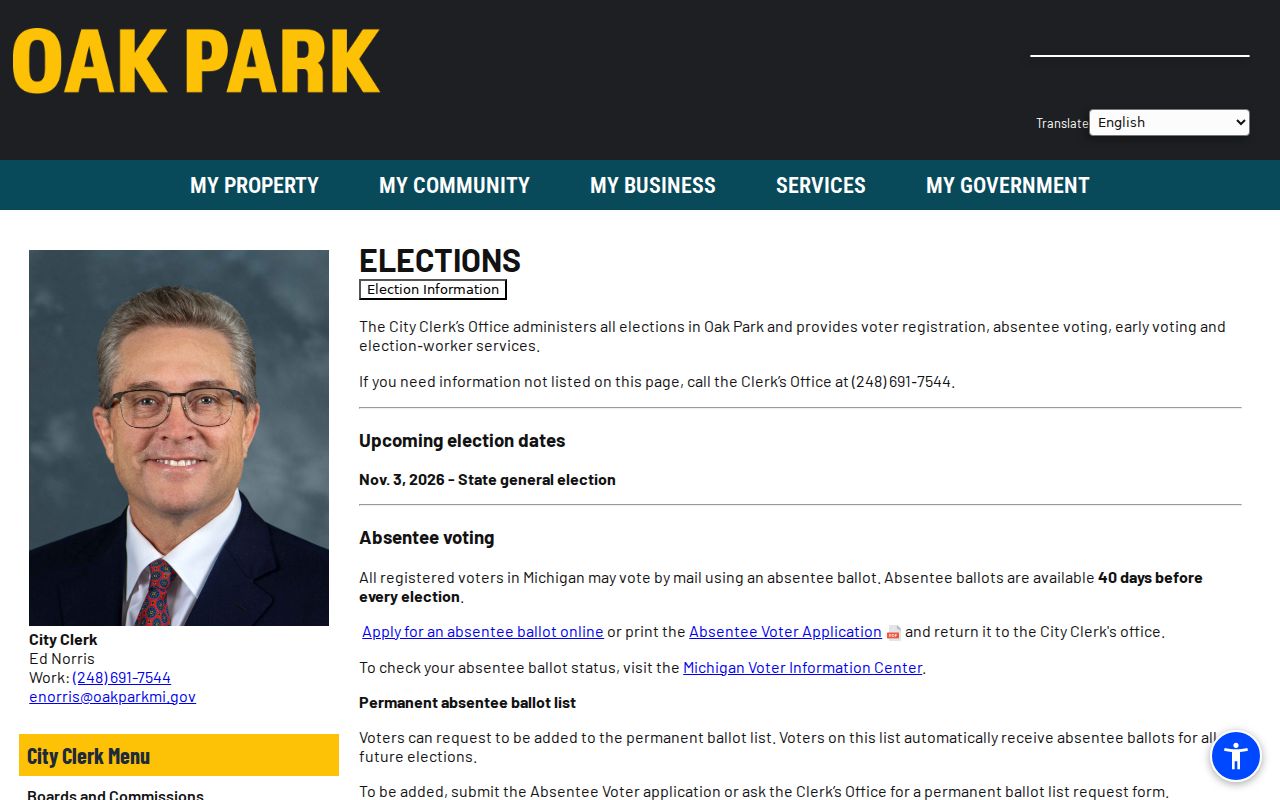
Let the city material point you to the official channel. Keep the QVF request inside its stated lawful purpose and permitted fields. Nothing more belongs in it.
Note: A voter-file response covers only the public fields and geography selected, never a ballot choice or a protected identifier.
Oakland Genealogy for Oak Park
Genealogy questions about Oak Park families often start at the county level. Oakland County's free genealogy tool searches marriage and death records by person name, and it opens with a verification step before the search and ordering screens. Treat any hit as a lead. Spellings, dates, and jurisdiction gaps can all hide a result that really exists. County vital records staff can confirm what the tool missed. A blank screen is never proof that an event never happened.
The Oakland County genealogy search puts its record-type, name, and verification gate first.
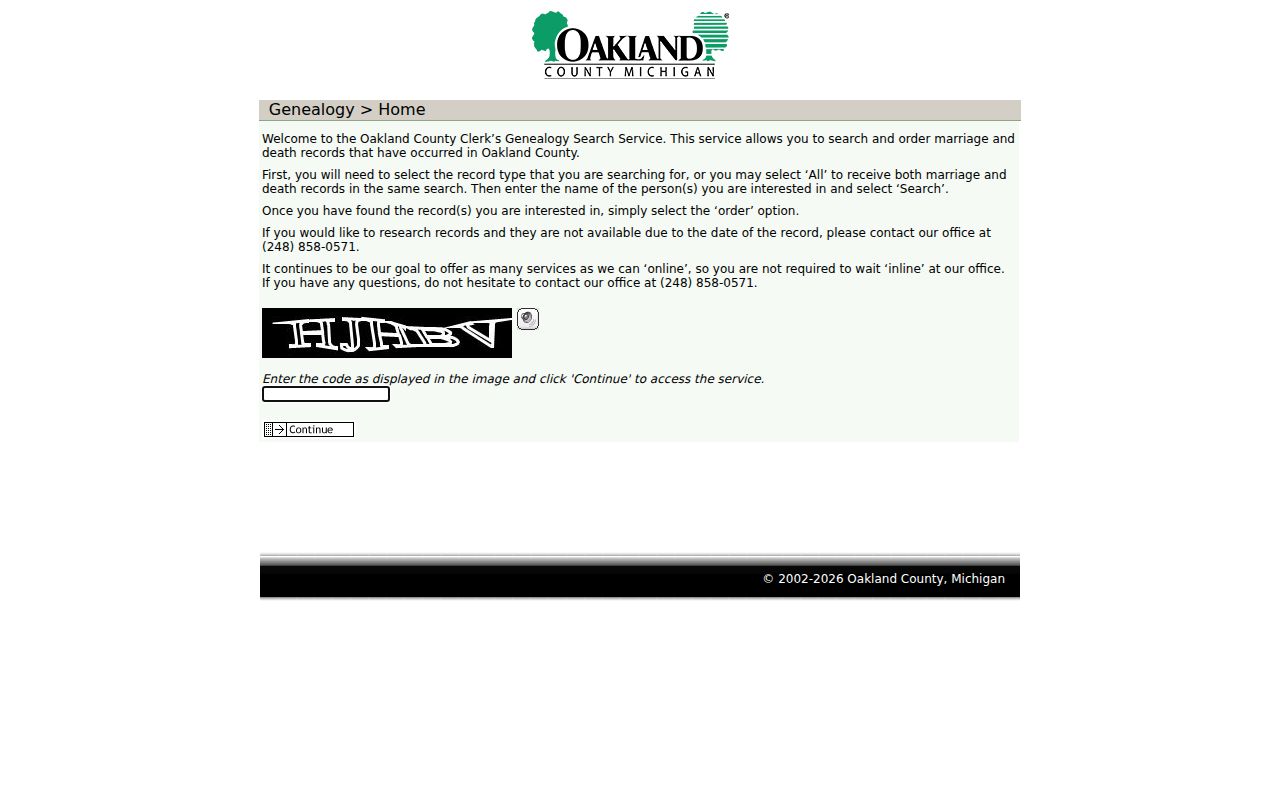
Once a lead pans out, order a certificate only through the county. You can also use the MDHHS vital-record route, and only if you are eligible. Michigan draws a line between ordinary certified copies and genealogy transmission periods. Births under 100 years carry the strictest limits. Births older than 100 years are broadly available under the MDHHS rule. The statutory genealogy period is 110 years for births. For death, marriage, and divorce records it is 75 years, unless a record is sealed.
Oak Park Custody Record Scope
Keep custody, court, and residence records separate in any Oak Park resident lookup. Oakland County's CLEMIS locator covers the county jail and opens with an acknowledgement screen. The county warns its data may lag by up to 72 hours. Charge and bond questions go to the court, not the locator. A jail result is a custody snapshot only. It establishes neither guilt nor a complete history. It also will not give you a current Oak Park address.
The CLEMIS inmate locator shows the acknowledgement step before any search fields or results appear.
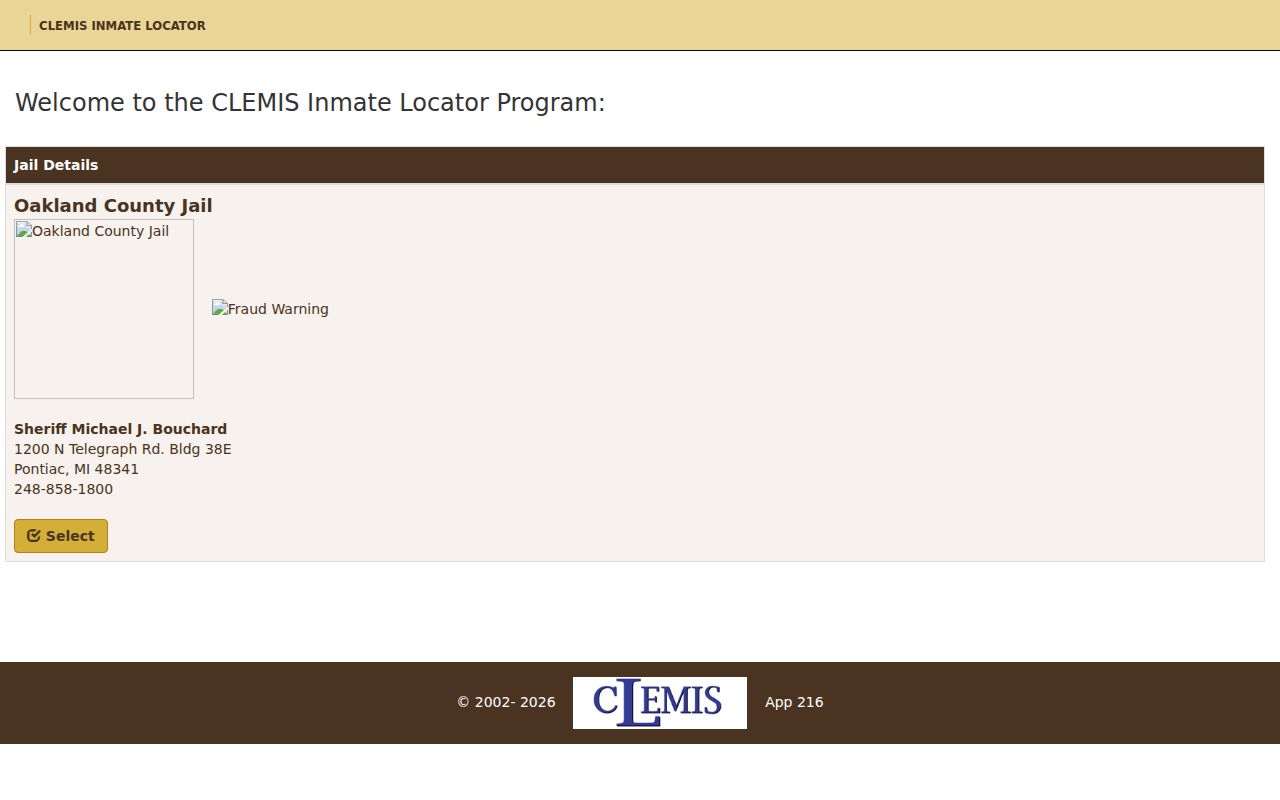
MDOC OTIS has a different scope entirely. It covers current state supervision plus up to three years after discharge. County jail-only records fall outside it. The same goes for jail-only sentences, unsentenced arrests, and older discharged cases. So expect different results across CLEMIS and OTIS rather than merging them into one profile.
Oak Park Registry Search Limits
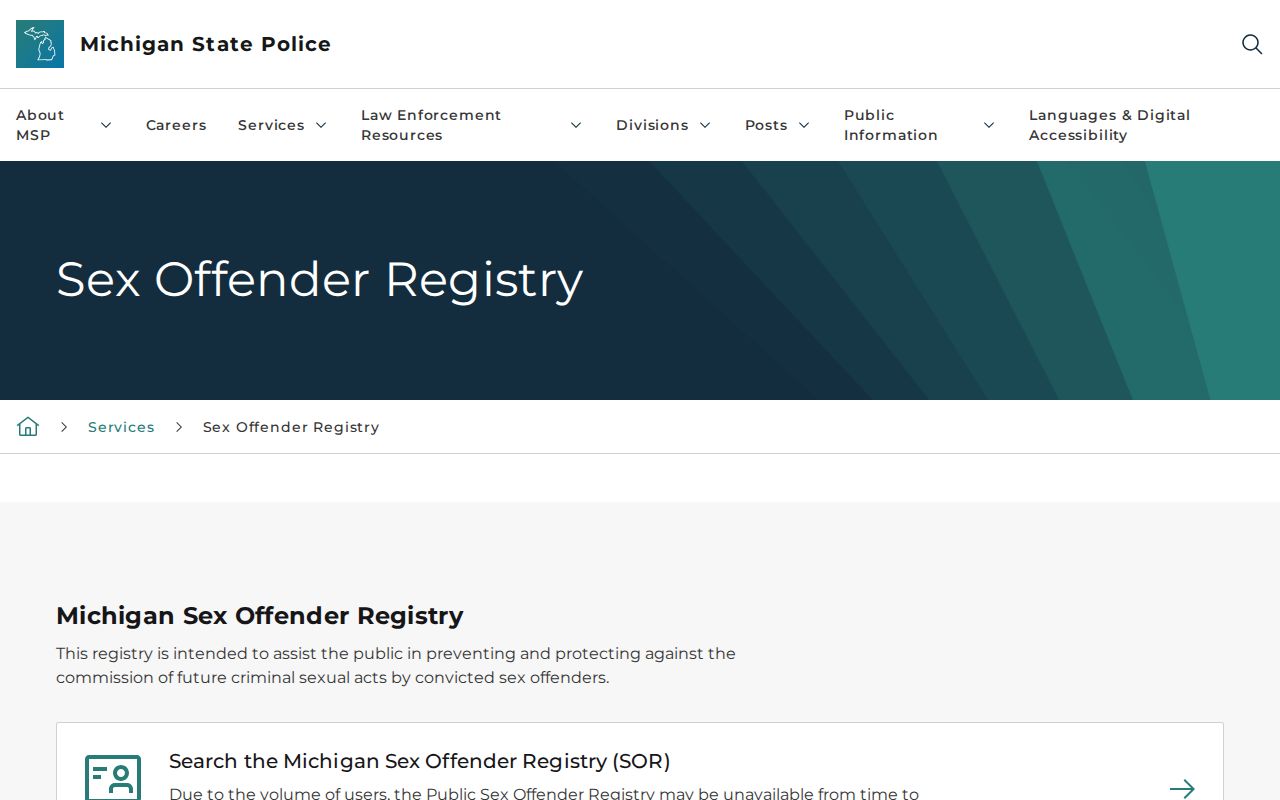
The Michigan State Police registry is a statutory resource with its own legal-use notice. Search options there include partial first or last name and registration or MDOC number. Visitors can also search by street with city, county, or ZIP. Map radii run from .25 to 5 miles. Filters separate all, published, incarcerated, and noncompliant records. There is no full downloadable list. A name match alone proves nothing; identity confirmation must come from the Michigan State Police.
The Michigan State Police registry page lays out the official search choices. It also carries the use warning.
A registry result speaks only to the registry's statutory scope. It is not a statement about present residency, an unlisted fact, or any other category of record.
Oak Park Resident Lookup Requests
An online display can come up short. Go to the custodian's own channel for that record class. The 45th District Court accepts written requests. Oakland County Vital Records handles county events in person, by mail, online, and through genealogy options. MDHHS lists mail, online or phone ordering, a drop box, appointments, and will-call. For municipal material, Oak Park's City FOIA Coordinator is reached at 248-691-7544 or FOIACoordinator@oakparkmi.gov. Public Safety keeps a separate FOIA contact.
A Michigan FOIA request should name the records sought and a delivery or contact route. Attorney General guidance describes an initial five-business-day response with a possible 10-business-day extension. That extension is subject to lawful fees. That process does not override court-record rules or protected voter and address information. If an online search fails, note the spelling and date range you used. Then turn to the right counter, phone line, library, archive, or written request instead of guessing from a blank result.
Note: Fees, hours, portal controls, and delivery times change, so confirm them with the named custodian before sending payment or identity documents.
Oak Park Resident Lookup Safety
Michigan's Address Confidentiality Program serves eligible survivors and at-risk applicants. It provides a substitute address with mail forwarding. An ACP signal is a stop point. Never try to reverse a protected location through linked records. Instead, ask the custodian how to handle a possible protected record. Public displays can also carry stale addresses, redactions, and same-name collisions. Keep protected details out of personal notes. That includes protected birth details, signatures, ID numbers, account numbers, private contact information, victim information, and protected addresses.
Lawful use. Use an Oak Park resident lookup only for personal, lawful research such as family history, estate work, civic questions, or confirming a record. Never use a result to stalk, harass, intimidate, or locate a protected person.
Michigan's stalking law covers a course of conduct involving harassment. If a record raises safety or fraud concerns, use the official custodian or Oak Park Public Safety's nonemergency number, 248-691-7520, rather than contacting a person from a record match. Often the safest conclusion is simple. The source cannot confirm the point at issue.